What if your puppy’s growl isn’t “bad,” but a warning you’re supposed to listen to?
Puppies explore the world with their mouths. They play, chew, and test everything, including your hands. Those needle-sharp teeth can feel cute at seven weeks, but by three to four months, puppy growling and biting can start to hurt—and it can scare you.
Most mouthing is normal. Still, some aggressive puppy behavior comes from fear, stress, or frustration. When that’s the driver, it can raise the risk of bigger problems later if you ignore it.
Growling is communication, not “attitude.” Your puppy may be saying, “I’m uncomfortable,” “I’m scared,” or “Stop.” If the situation keeps going, a bite can follow, even in an already sweet dog.
This guide gives you clear puppy biting solutions without punishing the warning signs. You’ll learn how to tell play-based nipping from overstimulation, and how fear-based biting looks different. With early training and smart socialization, you can build safer habits now—and a calmer adult dog later.
Key Takeaways
- Puppies use their mouths to explore, play, and chew, so some biting is normal.
- Puppy growling and biting often gets worse around 3–4 months as your puppy grows stronger.
- Growling is a warning signal that your puppy feels uneasy, scared, or frustrated.
- Some aggressive puppy behavior is rooted in fear or stress and needs early attention.
- You’ll get puppy biting solutions that focus on safety, training, and prevention.
- Early socialization and consistent routines help shape a well-behaved adult dog.
Common Reasons for Puppy Growling and Biting
Puppy growling and biting can seem scary, but it’s often simple. Your puppy is learning to use their mouth, read your reactions, and handle new situations. Knowing what your puppy is trying to say is key to good dog behavior training.
Growling can mean different things. Some growls are happy during play, while others show stress. It’s important to understand the sound and the situation.
Understanding Puppy Behavior
Mouthing is normal for puppies. They explore the world with their mouths, which can lead to them biting hands or sleeves. Redirecting them to toys instead of punishing is a common training tip.
Teaching your puppy to control their mouth is crucial. Without this, they might bite too hard during play. With training, they learn to be gentle, which is important for their safety and yours.
Teaching your puppy to mouth softly can also protect them later. A soft mouther is less likely to bite hard in fear or pain. This is why it’s important to guide their behavior, not ignore it.
The Role of Fear and Anxiety
Growling can be a warning, not a bad attitude. If your puppy feels trapped or scared, they might growl for space. Calmly supporting them teaches them not to snap.
Temperament plays a big role, too. Some puppies recover quickly, while others need more time. Your handling and training make a big difference, regardless of breed.
To tell if your puppy is happy or stressed, look at their whole body. Watch their tail, muscle tension, and if they can easily stop. With time, you’ll learn to read their signals before they growl or bite.
Overstimulation and Playfulness
Puppies can get overexcited fast. During play, they might growl, grab, and move quickly. The sound can seem intense, even when they look relaxed.
Too much play can lead to overstimulation. You might see jumping, nipping, and trouble calming down. Short breaks and calm redirection can help without making play a fight.
| What you notice | Likely driver | Common body language | Helpful next step |
|---|---|---|---|
| Mouthing hands during petting | Normal exploration and attention-seeking | Loose face, wiggly body, returns for more contact | Swap in a chew toy and reward calm mouth; use dog behavior training cues like “sit” before petting |
| Growl when approached near a hiding spot | Fear or anxiety | Stiff body, tucked tail, whale eye, backing away | Create space, lower pressure, and pair the trigger with treats; apply puppy training tips that build confidence |
| Growling during tug, then biting harder | Overstimulation and play escalation | Zooming, quick grabs, ignores cues, can’t settle | Pause the game, ask for a simple cue, then restart calmly; keep sessions short to limit puppy growling and biting |
Identifying Triggers for Growling and Biting
Spotting patterns is key when dealing with puppy aggression. Growls and teeth are signals. Punishing them might make your puppy miss what they’re trying to avoid.
Keep a simple log for a week. Note the place, time, who was nearby, and what happened right before puppy growling and biting starts. This short pause can reveal the real trigger.
| Trigger question | What to watch for | What you do next |
|---|---|---|
| Are there other dogs around? | Stiff posture, hard stare, rushing into play, then a sudden snap when play gets intense | Create space, shorten play, and add calm breaks so controlling puppy aggression becomes easier |
| Does it happen around strangers? | Backing up, freezing, tucked tail, growling when someone leans in or reaches over the head | Let your puppy choose distance; reward calm looks and slow approaches instead of forcing contact |
| Is it related to objects? | Growling over food, chews, toys, the couch, or a crate door; guarding or grabbing and running off | Trade for treats, manage access, and practice gentle swaps to reduce conflict without pressure |
Environmental Factors
New sounds, fast movement, and unfamiliar objects can confuse a young dog. A vacuum, skateboard, doorbell, or crowded hallway can turn into a worry trigger in seconds. That’s why puppy growling and biting sometimes shows up “out of nowhere.”
Watch for stress during handling, too. If a child holds your puppy and your puppy can’t get away, you may see a freeze, then a backward scoot, then a growl. In those moments, controlling puppy aggression often means changing the setup, not “correcting” the growl.
Interaction with Other Pets
With safe puppy-to-puppy play, your dog learns bite inhibition. When one puppy bites too hard, the other yelps and the play stops for a beat. Then they reset and continue, and your puppy learns that softer mouths keep the game going.
Problems start when play escalates too long. Chasing can get frantic, and rough wrestling can flip into a tantrum-like burst. For dealing with puppy aggression in multi-pet homes, step in early with short breaks, separate chew time, and calm exits.
Socialization Experiences
Too little social time can make the world feel suspicious. Too much, too fast can overwhelm your puppy and create the same distrust. Either way, puppy growling and biting may show up when your puppy feels cornered or rushed.
Let your puppy lead at their pace. Aim for short, positive exposures, then leave before stress spikes. That approach supports dealing with puppy aggression while keeping your puppy’s trust intact.
The Importance of Socialization
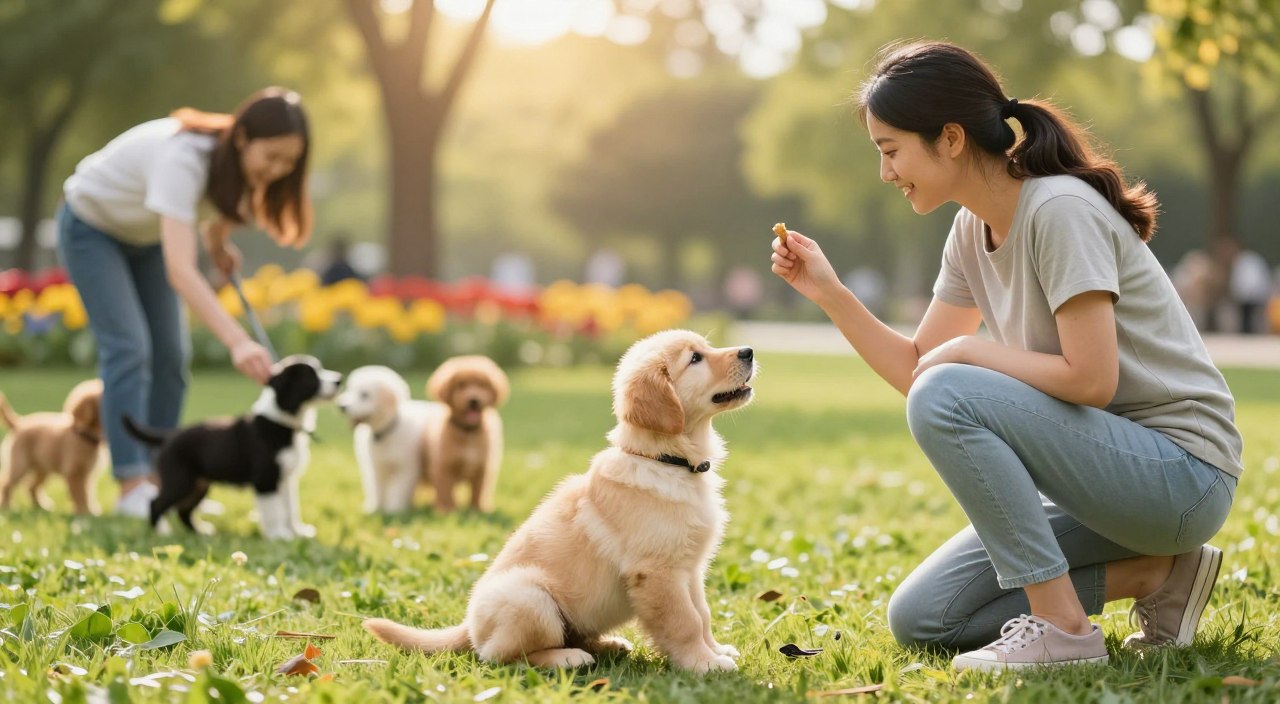
Socialization helps your puppy feel safe around new things. It makes puppy growling and biting less common. This is because your puppy has fewer things to fear.
It also helps with puppy obedience training. Your puppy can focus better and recover faster after being startled.
Think of socialization as “real life practice,” not just one big event. Short, calm outings and gentle greetings help a lot. Use small treats to help your puppy get used to new things, and stop before they get overwhelmed.
Socialization Techniques
Let your puppy lead when exploring. If they pause or step back, give them space. This helps lower stress and prevents growling and biting from feeling trapped.
Set clear rules for family and visitors. Ask kids not to run up or grab the collar. Tell adults to stand calmly and let your puppy sniff first.
Make dog-to-dog time part of the plan, but keep it supervised. Arrange play with other puppies and friendly adult dogs. This helps your puppy learn to play nicely and reduces rough play.
If you want structure, enroll in a well-run puppy class. It includes supervised play and skill-building. This way, your puppy learns cues even with distractions.
| Situation | What You Do | What Your Puppy Learns |
|---|---|---|
| New place (parking lot, quiet park) | Stand at a distance, feed treats for calm looking, leave while your puppy is still relaxed | New environments predict good things and stay manageable |
| Visitor at home | Ask for a sideways kneel and a slow approach; allow sniffing first; no reaching over the head | People are less scary, so reactions stay softer |
| Meeting another dog | Choose a calm, vaccinated dog; keep leashes loose; interrupt if play gets too rough | Better social skills and fewer hard nips during play |
| Noisy sounds (vacuum, blender, trucks) | Start low volume or far away; pair with food; stop before your puppy panics | Recovery skills that support puppy obedience training |
Benefits of Early Socialization
Early socialization prevents reactivity and supports calm behavior. Your puppy learns what “normal” looks like. This reduces the need to growl or bite to create space.
Addressing fear early lowers the chance of your puppy growling or biting. It also builds a stronger base for obedience training. A confident puppy can learn faster and handle distractions better.
How to Discourage Growling and Biting
When your puppy growls or nips, you want to calm them down and teach control. The best way is to use calm timing, clear cues, and consistent dog behavior training. This approach is safe and helps avoid turning play into a power struggle.
Training Methods to Modify Behavior
Begin by teaching bite inhibition during play. Let your puppy gently mouth you, but stop play if they bite hard. Say a quick, high-pitched yelp and let your hand go limp. When they pause, praise them and start play again.
If yelping doesn’t work, use a short marker like “Too bad!” and stop playing. Be consistent and don’t repeat more than three times in 15 minutes. For hard bites, add a brief time-out by turning away or stepping out for 10–20 seconds, then return to gentle play.
As hard bites decrease, raise your standards. Treat moderately hard bites the same way, shaping softer mouths over time. This step-by-step approach teaches a skill, not just a rule.
Making Use of Positive Reinforcement
Reward the behavior you want to see. Praise and give small treats when your puppy licks, sits, or grabs a toy instead of your hand. Positive reinforcement makes training clearer and keeps your puppy relaxed.
Punishing growling can backfire. Growling is often a warning sign. Harsh corrections may suppress the warning without fixing the emotion under it. Instead, interrupt the moment, step away, and let your puppy calm down before trying again.
If petting triggers mouthing, feed tiny treats from your free hand while touching your puppy in short bursts. This teaches that handling predicts good things, helping sensitive or easily wound-up pups.
Setting Boundaries for Your Puppy
Make “teeth don’t belong on human skin” a steady rule. Keep tug toys and chew options within reach. Swap a toy in the instant your puppy targets fingers, sleeves, or toes. Choose noncontact games like fetch, and keep tug structured so hands stay out of the bite zone.
Ankle and foot biting needs a clear plan. When your puppy ambushes you, freeze your feet, then present a tug toy as a safe target. If you don’t have a toy, stay still, wait for the stop, then praise and reward—this is a simple way to practice how to stop puppy biting during high-energy moments.
| Common moment | What you do | What your puppy learns |
|---|---|---|
| Hard bite during play | Yelp, go limp, praise the pause, then restart; if needed, use “Too bad!” and stop play | Biting ends fun, calm behavior brings it back |
| Repeated biting | Brief time-out for 10–20 seconds, then return and offer gentle play | Self-control keeps you close; wild teeth create distance |
| Chewing hands or clothes | Instant redirect to a chew or tug toy; keep options nearby | Teeth belong on toys, not skin |
| Mouthing during petting | Pair light touches with small treats, then stop before your puppy gets overexcited | Handling feels safe and rewarding |
| Growling at you when overstimulated | Interrupt, step away, reduce stimulation, and give a calm break in another area if needed | Calm resets the situation; escalation doesn’t work |
Handling Fear-Based Growling
When your puppy growls, it’s important to understand why. Fear-based growling is a warning, not a challenge. Catching it early can prevent aggressive behavior from becoming a habit.
Fear growling often happens when your puppy feels trapped. This is common during rough handling by young kids. In these situations, prioritize safety and give your puppy space.
Recognizing Signs of Fear
Play and fear can look similar at first. Both may include growling and showing teeth. But, a playful puppy moves loosely and bouncily, with a curved posture.
A fearful puppy, on the other hand, freezes or moves backward. Their body becomes stiff and straight, and they stare intensely. A loud or high-pitched growl usually indicates stress, not play.
| What you notice | More like play | More like fear/stress |
|---|---|---|
| Body posture | Loose, curved, wiggly movement | Stiff, straight body; may freeze |
| Direction of movement | Bounces in and out, returns willingly | Leans away, backs up, tries to create distance |
| Face and eyes | Soft face; glances and looks away easily | Hard staring expression; tense mouth |
| Sound of the growl | Brief and mixed with playful energy | High-pitched or loud “stay back” growl |
| Common trigger | Games like tug or chase with breaks | Being grabbed, hugged, pinned, or held |
Techniques to Calm a Fearful Puppy
If the growl is fear-based, don’t punish it. Instead, step back and create space. This helps control puppy aggression by addressing the emotion.
Give your puppy control by calling them to you instead of picking them up. Reward them with small treats for coming. This builds trust and reduces aggression.
If your puppy growls when touched, treat it as a handling lesson. Pair gentle touch with treats or small pieces of chicken. This makes touch feel safe and helps with fear-based aggression.
If you’re unsure if a growl is play or stress, play it safe. Redirect with a simple cue and move your puppy away from triggers. Avoid close contact with unknown dogs or young children until you understand your puppy’s behavior better.
The Playful Side of Growling and Biting
Puppy growling and biting can seem scary, even when they’re just playing. Many puppies make loud noises and show their teeth while they play. But, it’s important to look at the whole body, not just their mouth.
Healthy play shows a puppy with a loose, curvy body. They move quickly and stop suddenly. You might see a play bow, wiggly hips, and a relaxed face between play bursts. If their body stays soft, they’re likely just playing.
Understanding Playful Aggression
Play can sometimes turn into trouble if it gets too exciting. Learning how to stop puppy biting starts with knowing the difference between playful mouthing and hard bites. Gentle mouthing is normal, but hard bites are not okay.
Practice bite inhibition during calm play. Let your puppy mouth your hand lightly, then yelp if it gets too hard and stop playing. This teaches them that hard bites mean no more play, which is a key puppy biting solution.
Also, reduce games that involve your hands, like wrestling. Keep tug toys close to quickly redirect if needed. Use short fetch games to burn energy without making your fingers a target.
Managing Playtime to Prevent Biting
Set clear rules for starting and stopping play. If your puppy growls, pause the game and stay still. When they calm down, you can start playing again. This teaches them that calmness leads to fun.
Watch dog-to-dog play closely. If both dogs are bouncy and take turns, play is likely okay. But, if you see stiff legs, frozen stares, or pinned posture, use a simple cue to stop and separate them for a break.
Overexcitement often leads to puppy growling and biting. If your puppy can’t calm down, move them to another room or crate for a short break. Bring them back when they seem calmer.
| What you notice | What it often means | What you do next | Why it works |
|---|---|---|---|
| Loose, wiggly body with quick hops and pauses | Normal play energy | Keep play short; rotate tug and fetch | Channels drive into structured games and supports how to stop puppy biting |
| Growl starts mid-game but body stays soft | Over-arousal during play, not a threat | Stop play; restart only when quiet | Builds a clear rule: calm brings fun back, a simple puppy biting solutions plan |
| Teeth pressure increases on hands or sleeves | Bite inhibition is not learned yet | Yelp briefly; end play on hard bites; redirect to a tug toy | Teaches gentle mouth control and reduces puppy growling and biting during handling |
| Rigid bodies, hard staring, or one dog keeps cornering the other | Play is turning tense | Use an interrupter cue; separate and reset | Prevents escalation before it becomes a fight and protects social skills |
| Zoomies, nonstop grabbing, can’t settle after play | Overtired or overstimulated | Cooldown in crate or quiet room, then try again later | Lowers arousal so training sticks and supports how to stop puppy biting long term |
When to Seek Professional Help
Most puppies mouth and growl during play. You can often improve this with steady puppy obedience training at home.
But some patterns need faster support. This is true for puppy aggression that feels intense, sudden, or hard to interrupt.
Getting expert eyes early can protect your hands, your puppy’s confidence, and your routine.
It also helps you avoid guesswork. You can build a plan that fits your home through structured dog behavior training.
Signs Your Puppy Needs Expert Guidance
Escalate beyond DIY if the biting is fear-based, repeats during frustration, or shows up as “temper tantrums.”
Watch for a stiff or frozen body, exposed teeth, low growling, and bites that are much more painful than normal mouthing.
These bouts do not usually fade on their own. It’s smart to address them early with puppy obedience training that targets the cause, not just the symptom.
In the moment, stay calm and neutral if your puppy tantrums while you’re holding or handling them.
Don’t yelp like you’re hurt, since it can ramp things up. Instead, without hurting your puppy, keep a firm hold without constriction when possible until they stop struggling.
When your puppy is quiet for a second or two, let go, create space, and plan for professional help with dealing with puppy aggression.
Choosing the Right Trainer or Behaviorist
For serious fear or aggression, look for a Certified Applied Animal Behaviorist (CAAB or ACAAB) or a Diplomate of the American College of Veterinary Behavior (Dip ACVB).
If you can’t find one nearby, a Certified Professional Dog Trainer (CPDT) can still help. But confirm they have real experience working fear and aggression cases.
Ask for a clear plan that uses positive reinforcement. It should include coaching on timing, management, and safe handling, not punishment.
A skilled professional can also spot household patterns that keep bites going. They can adjust your dog behavior training so it works in real life.
| What you’re seeing | Why it matters | Who to contact | What a good plan includes |
|---|---|---|---|
| Normal mouthing during play that stops with breaks | Often improves with consistency and better play skills | CPDT-led group class or private coaching | Structured puppy obedience training, bite inhibition games, planned rest, and better toy swaps |
| Frustration biting that repeats during handling or when denied access | Can become a learned pattern if it keeps working for your puppy | CPDT with fear/aggression experience; consider CAAB/ACAAB if intense | Dog behavior training focused on impulse control, handling steps, and management to prevent rehearsal |
| Fear-based growling, freezing, or snapping | Signals emotional distress and a higher risk of escalation | CAAB/ACAAB or Dip ACVB; CPDT can support alongside them | Dealing with puppy aggression through trigger tracking, desensitization, and safety rules for space and approach |
| “Tantrums” with stiff body, exposed teeth, and very painful bites | Not typical puppy play and unlikely to be outgrown without a plan | CAAB/ACAAB or Dip ACVB; CPDT only if proven fear/aggression background | Immediate management, calm handling protocols, and a step-by-step behavior plan you can repeat at home |
Health Issues That May Cause Aggression
Not all aggressive puppy behavior is a training problem. Sometimes, it’s your puppy’s way of saying, “That hurts,” or “I’m scared.” A growl is a warning that a bite could come next. So, focus on the cause instead of punishing the sound.
Smart puppy training tips still matter here. Teaching gentle mouth control and bite inhibition can add safety if your puppy reacts during fear or pain. It won’t replace medical care, but it can reduce the risk of a severe injury during a stressful moment.
Identifying Pain or Discomfort
Watch for “back off” moments. If your puppy growls when you pick them up, touch a paw, fasten a harness, or reach near the food bowl, stop and give space. For controlling puppy aggression, forcing contact in these moments can make your puppy feel trapped and raise the chance of a bite.
These patterns can point to discomfort rather than defiance:
- Sudden snapping during handling, brushing, or nail trims
- Guarding a spot on the couch or bed they didn’t guard before
- Flinching, yelping, limping, or stiff movement after play
- Changes in appetite, sleep, energy, or potty habits
| What you notice | What it can suggest | What you do next |
|---|---|---|
| Growling when touched on one side, ear, mouth, or belly | Tender area, skin irritation, dental pain, or an injury | Stop handling that area, note the exact spot, and plan a vet exam |
| Biting when lifted, hugged, or moved off furniture | Neck, back, or hip discomfort; fear of being restrained | Use treats to lure instead of lifting, and reduce restraint until evaluated |
| Growling near the food bowl only when people approach | Resource guarding, stress, or pain made worse by close contact | Back up, increase distance, and switch to calm bowl routines with space |
| Behavior shifts fast over a few days | Illness, pain, or a new sensitivity to touch or noise | Track timing, triggers, and intensity, then schedule a checkup |
When to Visit the Veterinarian
Make a veterinary appointment before relying only on training if growling or biting starts suddenly, ramps up quickly, or is tightly linked to touch and handling. Ruling out discomfort supports safer work on aggressive puppy behavior and helps prevent fear from building.
Bring a short log: what happened right before the growl, where you were touching, and how your puppy recovered. Until you’re seen, stick to puppy training tips that lower stress—more space, slower handling, and rewards for calm—so controlling puppy aggression doesn’t turn into a struggle that scares your puppy more.
Maintaining a Positive Environment for Your Puppy
A calmer home helps your puppy learn faster and bite less. You’re not trying to stop play; you’re shaping it into gentle, safe fun. A steady routine makes puppy obedience training simpler and lets your pup relax.
Creating a Safe Space
Set up a quiet “reset” spot, like a crate or a small room, for short breaks. If your puppy gets too wound up or starts growling, remove them from the action and let them decompress for a minute or two. Keep the area puppy-proofed for quick separations, so there’s nothing unsafe to chew or swallow.
Stock your space with chew options and rotate toys to keep interest high. Keep tug toys within reach, so you can redirect teeth off hands and onto something appropriate. This toy-first setup supports dog behavior training and gives you practical puppy biting solutions in the moment.
Building Trust Through Consistency
Make your boundaries predictable: painful play stops, gentle play continues. Use the same yelp or brief time-out rule every time, so your puppy learns what ends the game. Avoid intimidation and physical punishment, since it can raise fear and lead to harder biting.
Look for chances to reward calm, quiet behavior during the day. Pair exercise with mental work like simple cues, food puzzles, and short training games. When you do puppy obedience training this way, dog behavior training stays positive, and your puppy biting solutions become part of daily life—not a crisis plan.